


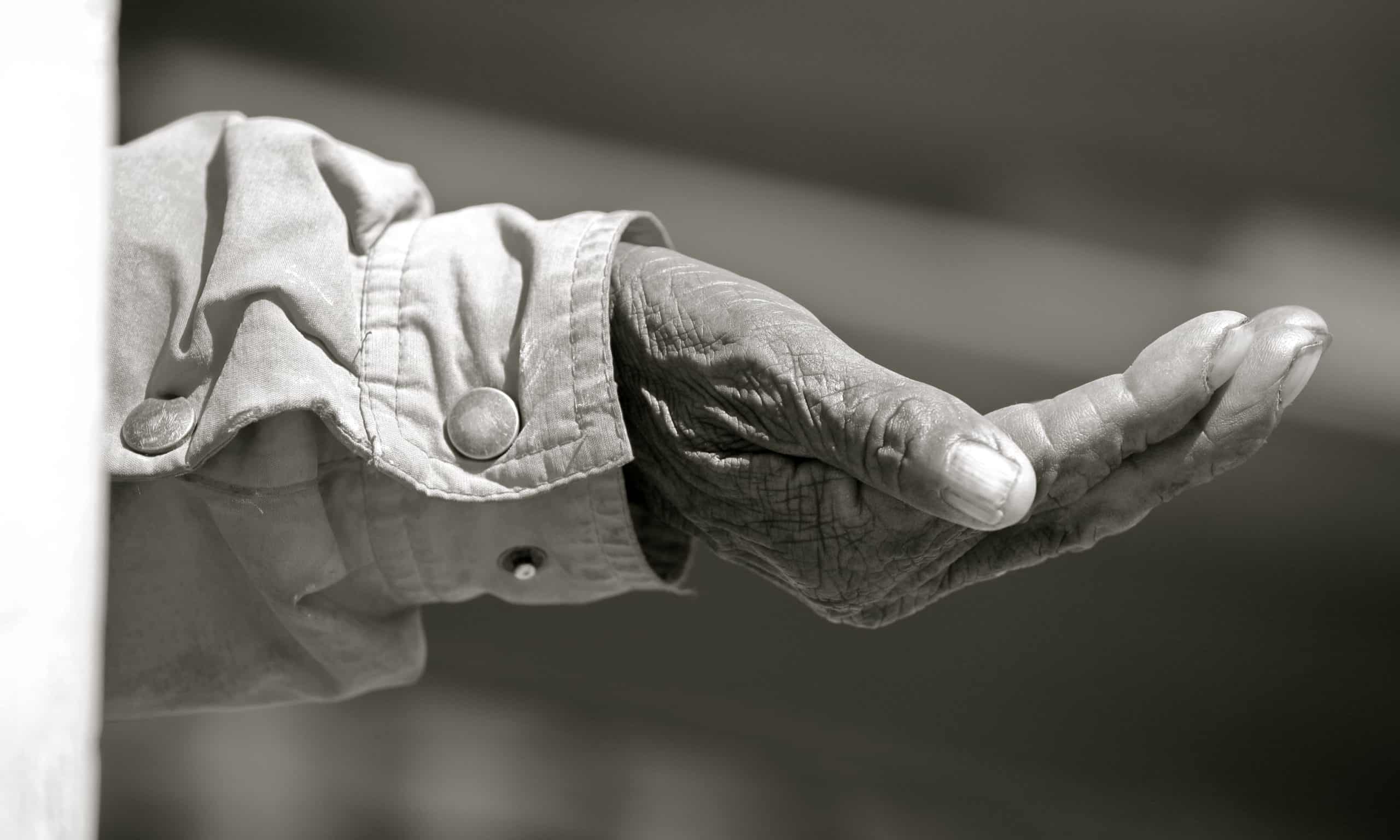
It’s a situation that often makes me uncomfortable. Sometimes I’ll cross a street or turn a corner in an attempt to avoid the encounter. Usually the request haunts me, especially when the person looks me in the eye. If you live in a city, it’s a moral dilemma you probably face every day. What do you do when someone stops you on the street and asks for money?
The first thing that often floats through my mind when I confront any ethical quandary is the pithy maxim, “What would Jesus do?” Of course Christians should model their behavior following the pattern of the life of Christ, but if we’re being realistic we must acknowledge that the landscapes of first-century Palestine look a little different from the concrete jungles of twenty-first-century America. Plus, often underlying that phrase is the idea that Christ is little more than a noble moral teacher, and if we all try hard enough we’ll be able to live like him.
Basically, as we consider this question (“What’s my response to a panhandler?”), we must examine two keys at the root of the Christian moral life. The first is that the Scriptures don’t offer explicit instructions for every ethical dilemma we face (it’s not plainly evident where modern bioethics or just war theory appears in the Sermon on the Mount or St. Paul’s letters, for instance). The second hidden premise demands that we acknowledge the secret, even subtle working of Divine grace, which promotes and sustains the moral life.
With respect to the fact that the Scriptures aren’t always easy instructions like a Lego building set for the moral life, it’s helpful to see how building up virtues–that is, those stable dispositions to seek the good–shapes who we are. In this case, the virtuous response might not be to simply hand out money (perhaps you’ve already donated to Catholic Charities, or you don’t actually have cash to spare), but it’s always virtuous to offer a compassionate response. Extending a handshake, asking for a person’s name, and meeting his eyes all acknowledge a person’s dignity, which above all is the thing to be protected. When people become objects for aid, mere numbers in handout lines, their dignity can be swept aside, even swept away.
A smile, authentic interest, even the offer to hold someone up in prayer, are real gifts. These responses are far from bleeding-heart insincerity. Rather, they build someone up and help them be seen–and see themselves–as they were created, as they were meant to be. Christian charity, after all, means a lot more than simply “feeling bad” for someone else. The cost to the giver may not involve money at all, since, in a way, money is easy to throw away. Meeting someone in conversation demands vulnerability, requires time, and can even–since many city-dwellers see the same people on the street regularly–stipulate the responsibilities of a kind of friendship. Building up the disposition toward this kind of extremely personal compassion demands the virtues of the Christian moral life, virtues that flow from sustained reflection upon the teaching of Christ contained in the Scriptures.
Secondly, the moral life isn’t about effecting the most evident, external results. We Americans tend to be very utilitarian, fabricating our moral universes around what does or doesn’t offer the most good to the greatest number of people. The moral life is not about utility. Rather, it is about love of neighbor grounded in the love of God. It is grace, which joins us to God. It is precisely this sharing of Divine life which moves us to care for our neighbor. Grace can jump-start the heart, as we are moved by the Holy Spirit and guided into action. However, under this lens, we must seriously consider our motive: Am I throwing change in this man’s cup so that I may be rid of him? Or am I thinking of his well-being and reaching out to him because I was prompted by love?
In the end, the world only has one savior: Jesus. It’s not up to us to build the kingdom relying on our own strength or inclinations. Rather, our lives must be lived with hearts open to the ethic of heaven. The fact is, no one person could help every man he saw with money alone. Even Mother Teresa couldn’t do that. But when we meet someone on the street, we must remember our own vulnerability, be compassionate towards theirs, and be humble and brave enough to let our hearts lead us to be the Christian souls we’re called to be.
✠
Image: Alex Proimos, The Hand


.jpg)