It is a truth of the Church universally acknowledged that loving God is the end for which we are created. God’s love alone makes sense of and makes meaningful my life, your life. And yet loving God can seem difficult—not, to be sure, because God has loved us too little but rather because we have loved him too little. If we are to love God well, we must learn to know what and how to love through obedience to God.
Saint Augustine details this all-too-human predicament in his Confessions. On his journey to understanding God, he recounts the many dead-end loves of his life. He squanders his time for delight in games and shows; he panders to competition judges for honors; the reputation of friends induces him to lie and deceive; greed and ambition cause him to sell his talents. These loves toss and fling Augustine about for years. Chasing ever new and changing loves, he meets only with sadness and unfulfilled desire. His insatiable concupiscence has lured him into a pitiable misery. “[Casting] about for something to love, in love with loving,” Augustine knows not how to love, even if he knew what to love (Confessions III.1).
Our lives today often resemble a confusion and distraction similar to St. Augustine’s. We may not find ourselves in as dire a state of dissolution as he describes himself, but we do encounter our own fragmentation in his. We scroll unending feeds distracting us with the latest trends. Our self-worth rises and falls with likes and re-tweets. From college application essay to personal statement and LinkedIn post, our lives have become one giant self-promotion ad. We do not lack for things to love. We have loved trifles and ourselves too much.
How, then, can we gather our many affections into a unified love for God? Augustine tells us: “Yet through loving humility we find our way back to you . . . provided only we no longer defy you in the arrogance of a spurious freedom . . . loving some advantage of our own better than yourself, who are the good of all” (Confessions III.8, 16). If we would love God, we must love him over any “advantage [or desire] of our own.” This we show most simply by freely offering obedience to him. In the Dominican tradition for the feast of St. Augustine, we read at Vespers: “This is love: that we follow his commands” (1 John 5:3). To obey God is to love him.
God has created us with the wonderful freedom to choose what we will love and to love what we will. With this freedom, Augustine laments that he was late to love God. May we not add to that lament that we have loved God too little in favor of fleeting trends and affirmations and, like the rich young man and Augustine, find ourselves sad at God’s invitation to love him. Instead, let us put aside these small, selfish loves for joyful obedience to God. We will find our love for him in doing so, and he will return it to us a hundred, even a thousandfold.
✠
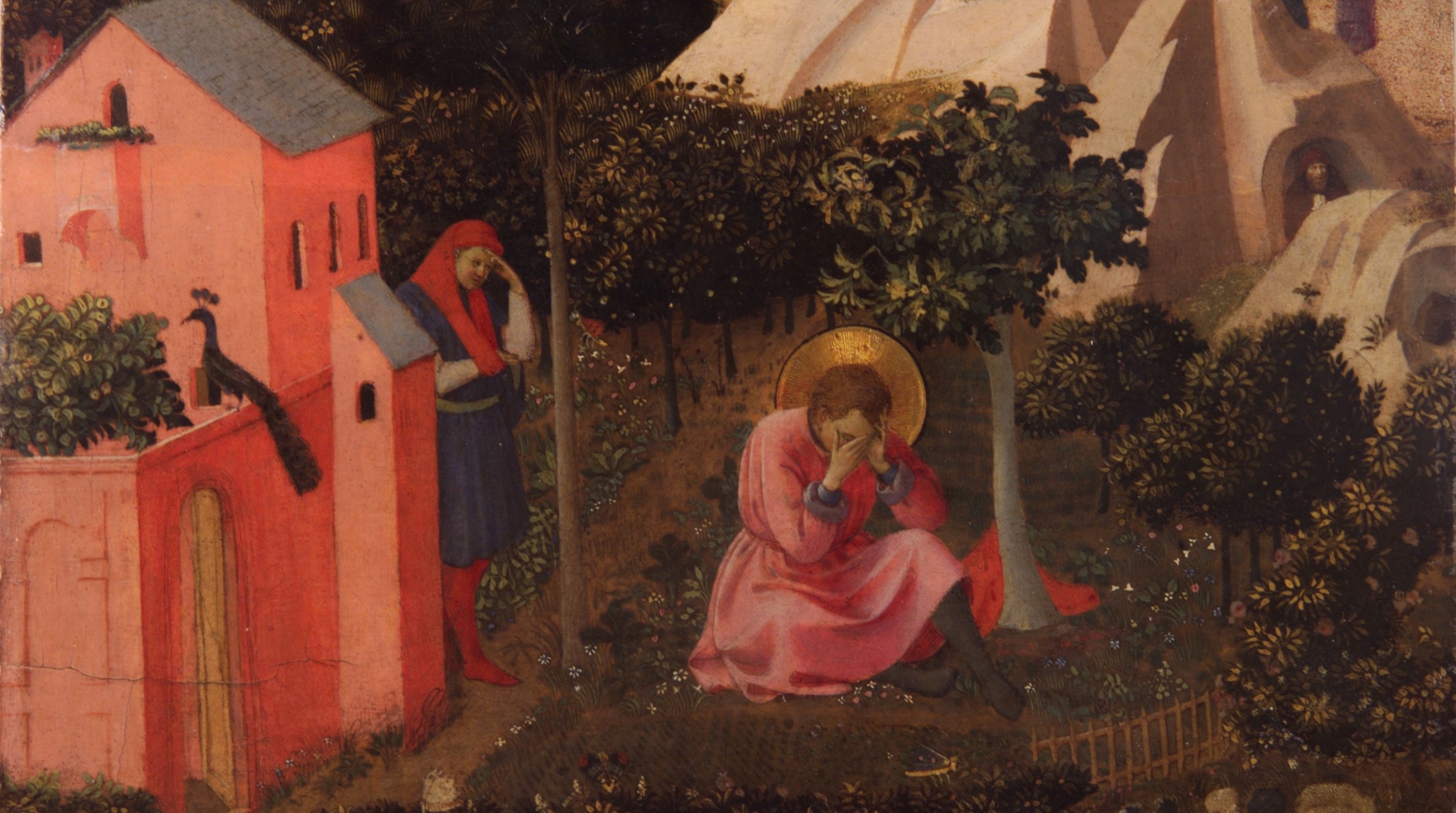
Image: Fra Angelico, Conversion of Saint Augustine