If anyone says, “I love God,” but hates his brother, he is a liar; for whoever does not love a brother whom he has seen cannot love God whom he has not seen. (1 John 4:20)
Developments in ultrasonic technology help us to clearly see that an unborn child is a human life deserving our love. Today, the anniversary of Roe vs. Wade, the Church in America observes a Day of Prayer for the Legal Protection of Unborn Children. Many pro-lifers will march in tomorrow’s March for Life to affirm that abortion is both damaging and wrong because it ends the life of an innocent human being.
Yet being pro-life does not stop at ending abortion. Unless the pro-lifer embraces the whole of human life, he or she could be accused of merely being “pro-birth.” The pro-lifer must promote the value of a full human life in its full human flourishing. Advocating for mere existence is not enough.
Human life is more than simple existence: it is about knowing and loving, and being known and loved. Our ultimate human flourishing occurs when we know and love God (John 17:3) and spills over into love for our neighbor. Every human being—from conception to natural death—deserves our love because they are loved by God, who made each of us in his image and likeness.
This is why a pro-lifer cannot be defined as simply being against abortion or any other individual issue. A pro-lifer must embrace so much more.
A pro-lifer must promote human flourishing for the entire human life—all those moments between conception and natural death. Every moment of the life of every human being matters.
The reality of each person’s infinite value and dignity is easy to agree with in theory but demanding and difficult to affirm in practice. Can one, in the face of so much evil and sadness, seriously affirm that all humans are created for flourishing and happiness? Isn’t this too much? Too Pollyannaish?
No. To deny the intrinsic value of every human is to betray the Christian message. No human is born in vain.
God’s love for humans is forever and constant: “With age-old love I have loved you” (Jer 31:3). God’s knowledge of us, his beloved, is eternal: “Before I formed you in the womb I knew you” (Jer 1:5). God’s plan for us is beautiful: “For I know well the plans I have in mind for you . . . plans for your welfare and not for woe, so as to give you a future of hope” (Jer 29:11). And as the ultimate proof of this, God sent his Son into the world “so that they might have life and have it more abundantly” (John 10:10).
Yet, again, it is one thing to affirm God’s love for all men in theory. Sharing this love with others in practice is another.
We get the strength to love our neighbor only because God has first loved us (1 John 4:19). Since God loves us first, we are then enabled to love him back by loving our neighbor. This is why Saint John teaches that our treatment of the brother whom we have seen is a reflection of our love for the God we have not seen. Our love for God is mediated through our love of neighbor.
This dynamic of love necessitates that you are the lynchpin that connects the love of God to other humans. To love others you need to know that God loves you. To love other people, you need to be loved first.
The assurance of God’s love for us drives us to love others made in his image. “If God so loved us, we also must love one another” (1 John 4:11). When we lean upon this love, we get the strength to love all our neighbors: born and unborn; old and young; sick and healthy; citizen and foreigner. We need never tire of loving, for our source is infinite and we are not called to love others by our willpower alone.
Let’s be true pro-lifers, loving all humans from conception to natural death—and for every moment in between.
✠
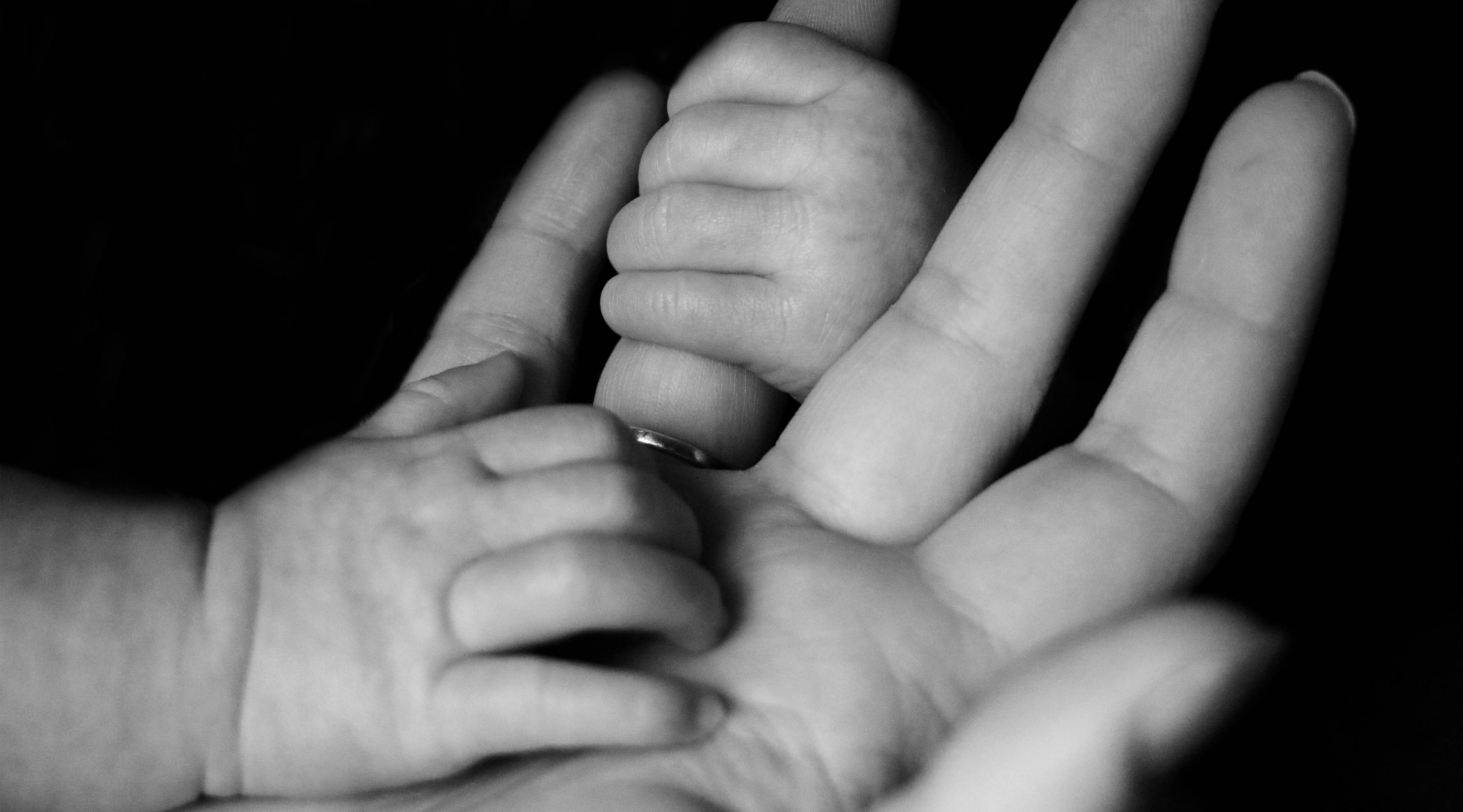
Photo by Liv Bruce on Unsplash.