Holy Saturday can feel somewhat confusing. This quiet day Jesus spent in the tomb is easily overshadowed by the two days that surround it. After all, what reveals God’s love for us any more perfectly than Christ’s Good Friday death on the cross? And what could inspire hope and confidence in our hearts like calling to mind Christ’s triumph over death, which we will sing out in tomorrow’s Easter joy? If the moment when God’s only Begotten Son breathed his last stands before us in all the chilling sharpness of a bright flash of lightning across a starless sky, and if the unspeakable joy of Jesus’ resurrection strengthens our hearts with all the intensity of the most piercing clap of thunder, then Holy Saturday places us in the quiet moment between the lightning and the thunder. On this day that falls so starkly in between two others, we may feel inclined to ask—what is God doing while Christ lay dead and buried?
Despite the stillness and quiet, God is not inactive on Holy Saturday. Jesus, the Word who came from heaven, once descended from the heights to live among us as a man; today we commemorate his second descent into the “heart of the earth” (Matt 12:40). Jesus, we recall on this holy day, is at the deepest point of his descent. Not only did the Lord share in mortal life, but now he shares in mortal death. And as he embraces human death and all the grief that comes with it, he displays for us just how deep his salvation goes.
Sin, as we are all so very aware, cuts very deep. But grace cuts even deeper. Christ took death, the ultimate sign of our sinfulness, the clearest mark of our self-imposed ostracization from God, and he wrapped it into his saving plan. He really died, and yet that did not thwart his salvation. Every moment that Jesus spent in the tomb—and we ponder these moments throughout Holy Saturday—gives us cause to reflect on this beautiful reality: there is no part of us that Jesus did not save.
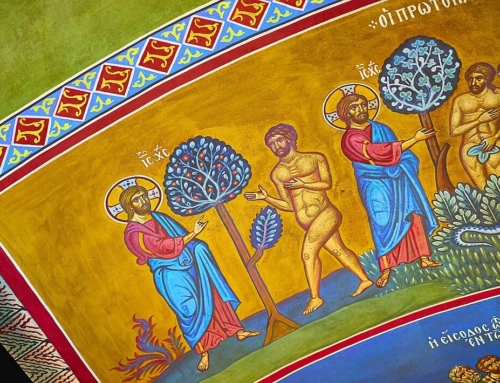
So, if we are tempted to think that we have a sin that marks us off as somehow beyond God’s saving power, let Holy Saturday destroy this lie. If we think that our cause for shame, whatever it may be, makes God unwilling or unable to redeem us, we are mistaken. Do not be deceived; grace cuts deeper than sin. Jesus Christ went as low as one can possibly go, to the very heart of the earth, to hell itself, and he arose victorious. There is no part of your life that is too low for Jesus. His power over sin extends as far as his power over the earth—all the way to the very depths. This is not to dismiss the reality of sin. Rather, it is a consequence of the fact that grace is simply more powerful than sin. We are twisted up and hunched over on account of our sinfulness, but God still joyfully heals us. We cannot “sin ourselves” out of reach of God’s love; we cannot take ourselves any lower than Jesus went on Holy Saturday.
Holy Saturday, nestled between two days of such great weight, gives us a chance to ponder the extent of God’s saving plan. Christ descended to the bowels of the earth so that he could bring us up from the pit of sin. When we find ourselves in an abyss of sinfulness, we need not despair: Christ can reach us, and he can elevate us. There is nothing we can do that puts us beyond Christ’s power to save.
Saint Paul exclaimed with joy in his letter to the Romans: “O the depths of the riches and the wisdom and the knowledge of God!” The riches of Christ’s passion cover everything. They extend from the highest of heavens to the lowest of depths. Jesus went as low as we can fathom so we may see the vast extent of his salvation. In the puzzling stillness of Holy Saturday, let us rejoice that God’s saving grace cuts so much deeper than our sin.
✠
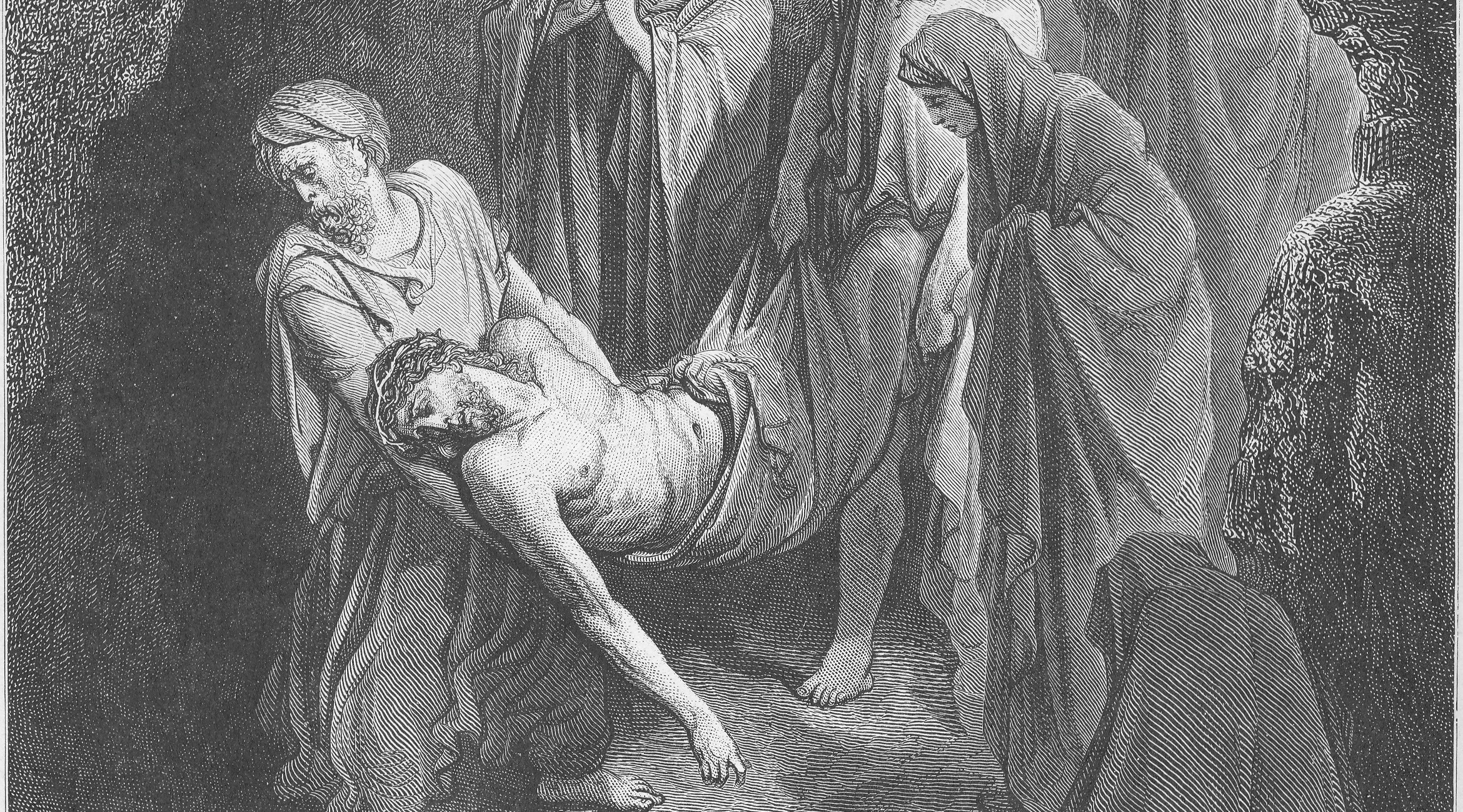
Image: Gustave Dore, The Burial of Christ