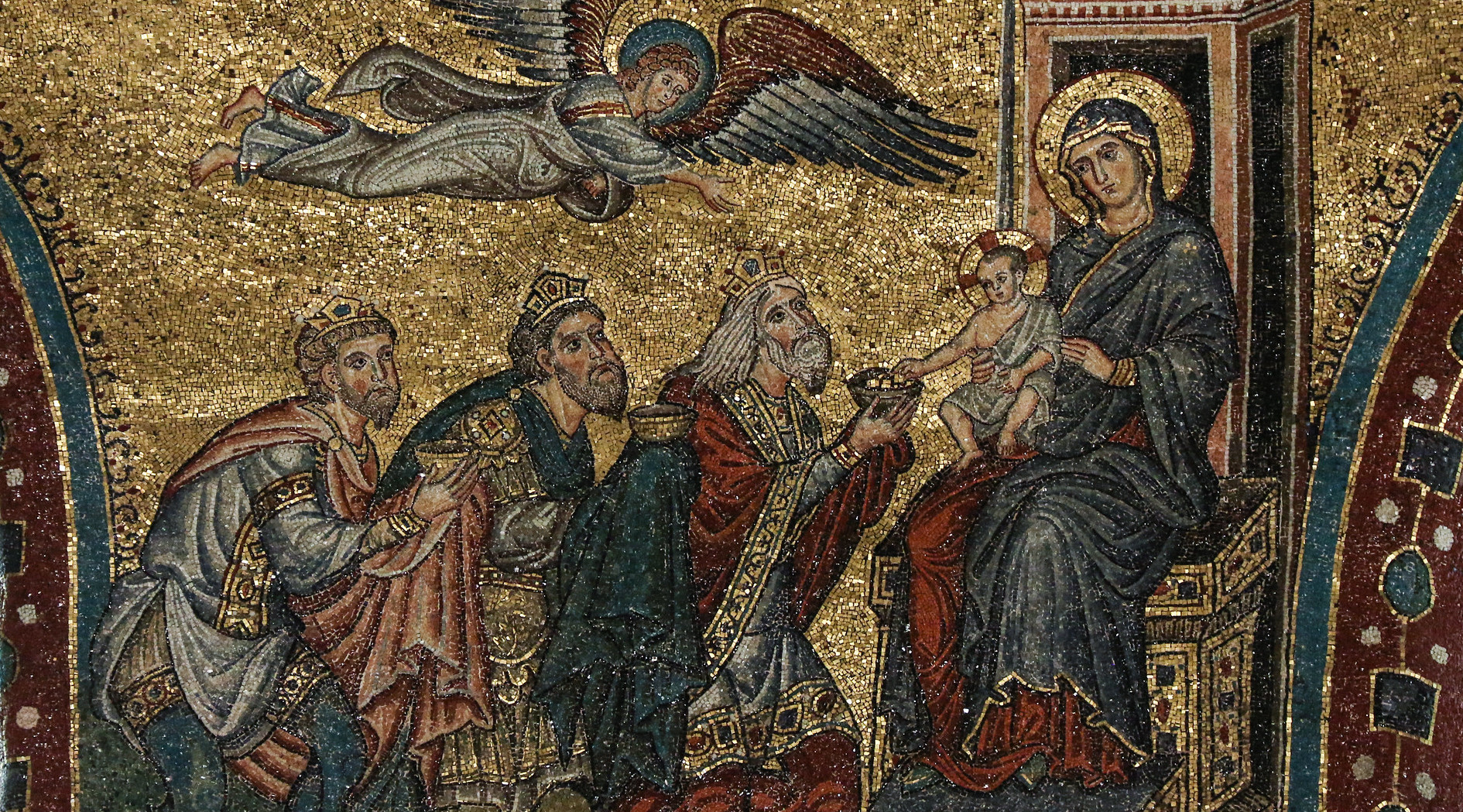
In September of 2025, President Trump gifted a replica of Dwight D. Eisenhower’s sword to King Charles of England, and in return, Trump received the Union Jack that was flying over Buckingham Palace during the most recent presidential inauguration. More than two thousand years earlier, the Magi—kings of the East—presented gold, frankincense, and myrrh to our infant Lord. Then, as now, world leaders still exchange gifts.
What is the meaning of gifting insignificant material goods to someone who already possesses so much? It is unlikely King Charles will be wielding a sword in battle any time soon. Equally unlikely is the flag of the United Kingdom flying over the White House lawn. At first glance, the exchange appears to be trivial. The real value of the gifts is in what they signify. The significance is not in the material gift itself, but the material gift is a means to deliver a deeper, invisible gift. In the case of President Trump and King Charles, the gift exchange is a sign of friendship between two countries. Saint Thomas Aquinas, in his commentary on the gospel of Matthew, discusses the significance of the gift of the Magi. Gold represents Christ’s royalty, frankincense, his priesthood, and myrrh the mortality of man. All three gifts are given out of reverence to the child Jesus (Matt C2, L3).
Yet, the Epiphany may not seem to us like a true, two-way exchange. It seems to be unidirectional, from the Magi to the Lord. In truth, the Son is himself a gift to us. He came two weeks ago at Christmas when the Father “gave his only Son, so that everyone who believes in him might not perish but might have eternal life” (John 3:16). God gave us the tangible gift of the incarnate Word to bring about the invisible gift of everlasting salvation.
Christ’s gift of himself is incomparable with anything of worldly value. Are the gifts of gold, frankincense, and myrrh fitting gifts in return? The Psalmist can teach us something about what God desires from us. He says,
Holocaust and sin-offering you do not request;
so I said, “See; I come” (Ps 40:7–8).
Psalm 40 tells us that God cares less about the material gift that you bring before him and more about the offering of yourself. Dominican friars prostrate themselves at their profession to demonstrate the offering of themselves that they make to Christ through the Order. The Magi did so when, at the sight of Christ and his mother, “they prostrated themselves and did him homage” (Matt 2:11). In both cases, the one prostrating is making himself a gift to the Lord. The gift exchange is self for self. Jesus gave himself to us at Christmas, and we offer ourselves back to him with the Magi. The gift that will truly please God is you.
It is simple to say that all the Lord wants from us is ourselves, but this seems easier said than done. Of course, it is great for the Church and for our charity to give our material possessions. But, the money we have to tithe may run dry. I don’t have an ornate sword, a historically significant flag, gold, frankincense, or myrrh to offer. But by the grace of God, we will always be able to go before the Lord like the Magi on the Epiphany and, with the Psalmist, say “see; I come.”
✠
Photo by Fr. Lawrence Lew, O.P. (used with permission)