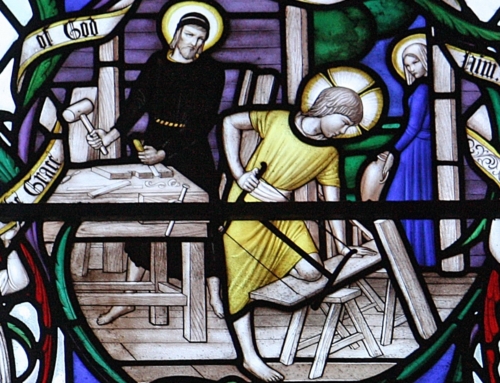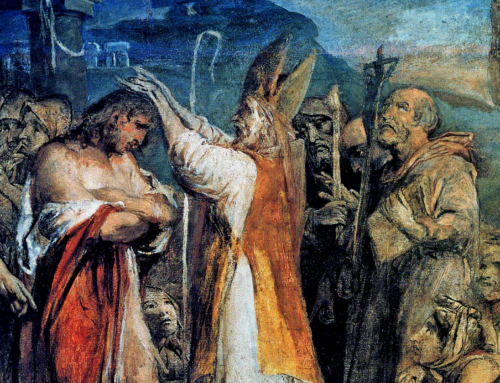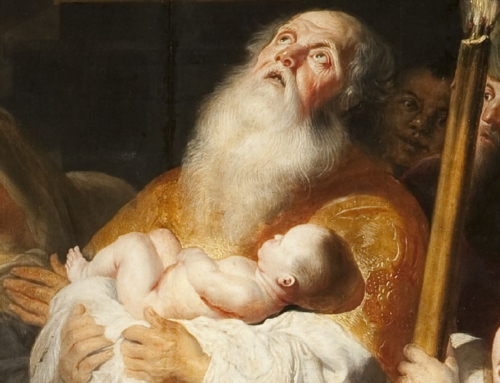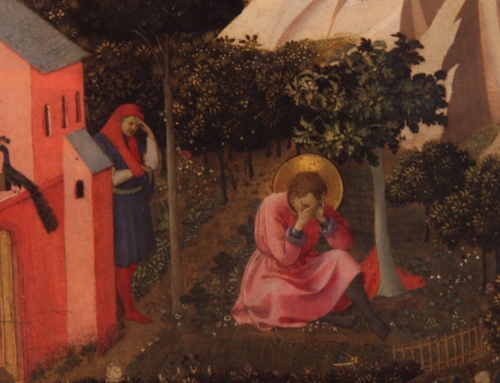
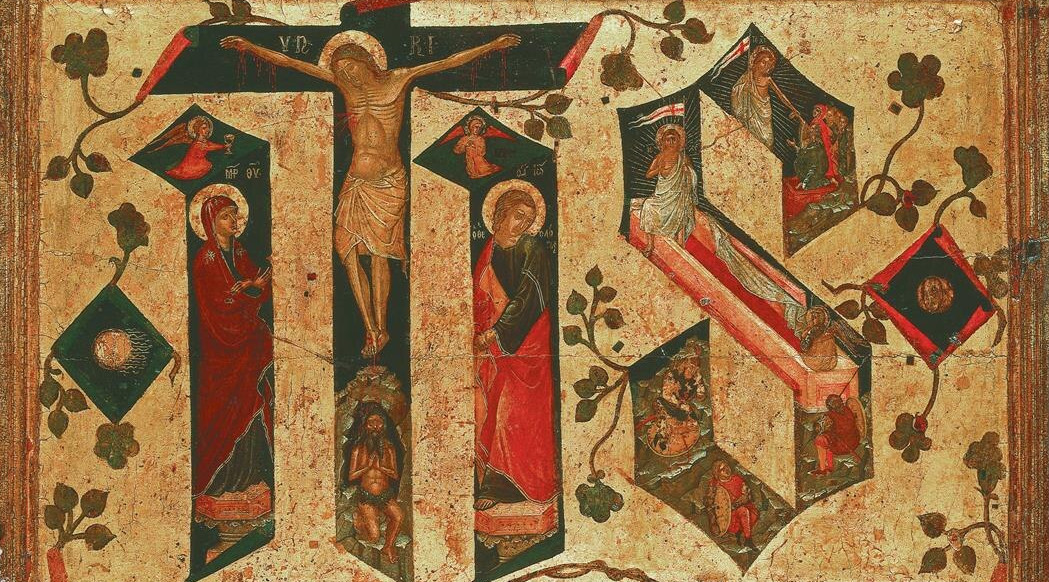
What is in a name? Shakespeare famously muses in his work Romeo and Juliet that there is really nothing inherently special about a name: “A rose by any other name would smell as sweet.” Yet, names actually do convey meaning about the realities that they describe. Think about what happens when you hear the name of a friend. Many thoughts come to mind: the image of his face, memories you have shared, that friend’s qualities. For this reason, the name of God has special importance. It conveys to us his qualities and reminds us of his saving work.
Devotion to the Holy Name has an important place in Catholic tradition, and the Dominican Order has been entrusted with the spread of devotion of the Holy Name since the 13th century. At the Second Council of Lyons, Pope Gregory X charged Blessed John of Vercelli, then the Master of the Order, to spread reverence for the Holy Name among the faithful. Some of the great saints and blesseds of the Order of Preachers have fostered a great love and devotion to the Holy Name: Saint Vincent Ferrer, Saint Catherine of Siena, Blessed Henry Suso just to name a few.
Additionally, in 1843, in the Discalced Carmelite Monastery in Tours, France, Our Lord communicated to Sister Mary of Saint Peter his desire for a revival of devotion to his name. Jesus lamented that his name was everywhere blasphemed and that there was no one who was willing to make reparation. To remedy this situation, Jesus gave Sr. Mary a prayer to honor his name: the Golden Arrow Prayer. If blasphemy against the holy name was like a poisoned arrow, then this prayer would be a golden arrow that brings forth grace upon mankind. Christ gave this particular prayer that the first three commandments may be kept: that God alone be worshiped, that his name be holy, and that the Sabbath be kept (cf. Exod 20:1–3, 7–11).
Honoring the Holy Name leads us to honor the Holy Face. Both the name and the face of God feature prominently in Scripture. When God spoke to Moses out of the burning bush, Moses asked:
“If I come to the people of Israel and say to them, ‘The God of your fathers has sent me to you,’ and they ask me, ‘What is his name?’ What shall I say to them? God said to Moses, ‘I am who I am’” (Exod 3:13–14).
In the period of the Temple, only the high priest was permitted to pronounce the Divine Name on the Day of Atonement. Later in Exodus, Moses asks God if he can see his face, to which God replies, “You cannot see my face; for man shall not see me and live” (Exod 33:20). While the face of God is holy—set apart such that none are worthy to see it—it is also the source of life. We read in the Psalms “Restore us, O God: let thy face shine, that we may be saved!” (Ps 80:3).
To see someone’s face and to know his or her name is to have knowledge of the person. When God shares his name with us and takes on our flesh in the Incarnation, he enables us to look upon his face. By sharing both his name and his face with us, God shows the depths of his love. He reveals something intimate about his person and shows forth his desire to have a relationship with his creatures. We should honor and respect God’s name and face as a reciprocal show of love. As Jesus said to Sr. Mary, “Those who on earth contemplate the wounds of my Face, shall in Heaven behold it radiant with glory.”
✠
Andreas Ritzos, Jesus Hominum Salvator