Terminal C. United Airlines. Arrival time: 8:13 a.m. Mass is at 9:00, and the church is 20 minutes away. It’s now 8:30. Still no sight of him. 8:35. If he comes out in the next five minutes, we can still make the 9:00 Mass. 8:40. 8:45. Well, I guess we’re not making the 9:00 Mass. Should I park to go in and look for him? That guy has a Carolina shirt on, so the plane definitely landed. Where is he? I’ll just stay put and wait.
And so I did. I waited in the pick-up line until my college roommate finally emerged from the arrivals area of the Newark airport. I soon discovered that he had indeed gotten off the plane with the other passengers but had been waiting for me on the upper level, not being too familiar with the layout of the airport. This was not the first time that, as a student-brother without a phone, I had to resign myself to waiting for someone without knowing when, or if, he would arrive.
For most of us, myself included before I joined the Dominicans, such occasions of having to wait in ignorance are typically avoided thanks to our phones’ capacity for instant communication. When we arrive at the coffee shop, we text our friend, “I’m here,” to which he might reply, “On my way. Be there in five minutes.” We even track our Amazon packages as they move from one carrier facility to the next, until we finally see the “out for delivery” update. But while technology might enable us to monitor with greater precision the many and ever-moving variables of our life, some things will always remain beyond our control. As much as we might like God to update us as frequently as Amazon about when and how he’s going to answer our prayers, or when our time on this earth will come to an end, the reality is that the Christian life demands waiting without knowing when. “Keep awake therefore, for you know neither the day nor the hour” (Matt 25:13).
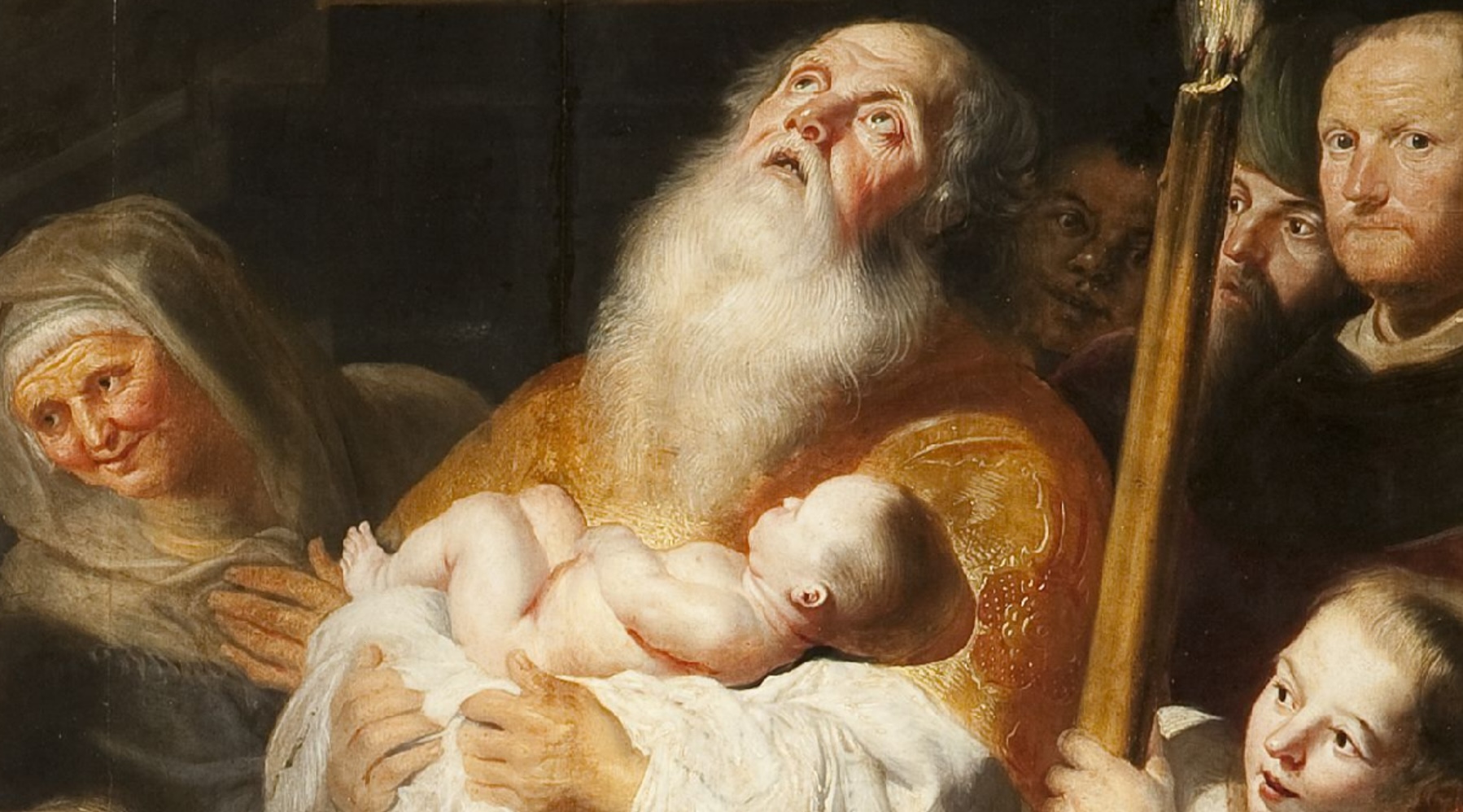
On this feast of the Presentation, Simeon offers us a model of patient waiting for the coming of Christ. God promised him that he would see the Lord’s Christ, but he gave him neither a day nor a time when he would fulfill his promise, only that it would come before his death. And so, until that time, he waited, keeping vigil and observing the commands of the Lord, such that the evangelist describes him as “righteous and devout” (Luke 2:25).
It’s no mystery that we’re a busy people, and we tend to think that it would be better not to wait. In our minds, waiting means “wasted time,” time that could have been spent taking care of other things. But as Christians, we must remember that, ultimately, our true worth is not measured by the things we get done, but by the charity with which we do all things (1 Cor 13:1–3). As all suffering done with love has a redemptive character, so too does waiting. Our waiting begets patience and increases our desire for God. Simeon, while waiting for the fulfillment of God’s word, daily grew in his desire to look upon the face of Christ his Salvation. When Christ finally came, his joy was complete, and he could exclaim, “Now, Master, you may let your servant go in peace, according to your word” (Luke 25:29). Like Simeon, we too are called to wait patiently for the fulfillment of the Lord’s promises, living righteous lives with the help of his grace. We trust that this faithful vigilance will increase our longing for God, so much so that when the day comes for our own presentation before the Lord, we too might embrace him in our arms with unimaginable joy. “Wait for the Lord, take courage; be stouthearted, wait for the Lord” (Ps 27:14).
✠
Image: Cornelis de Vos, Mysteries of the Rosary, Presentation of Jesus at the Temple