

On June 20th, 2013, Giovanni Giudici, the Bishop of Pavia, pronounced the cure of Danila Castelli to be miraculous, 24 years after her pilgrimage to Lourdes. Her cure, and the 68 other cures proclaimed miraculous, began as simply one more of the more than 7,000 cures that have been reported to the Medical Bureau of the Sanctuary at Lourdes. While all of the cases are marvelous in their own way, only this small fraction survived the many stages of extensive investigation, both medical and ecclesial, so as to eventually be considered “unexplained according to current scientific knowledge” by the Lourdes International Medical Committee and finally pronounced miraculous by the bishop of the cured pilgrim. It might seem incongruous to many common conceptions of the relationship of faith and science that a site of religious pilgrimage would have a dedicated medical bureau, with a procedure for the scientific study of purportedly miraculous cures, but really, it is perfectly reasonable.
The very idea of a miracle, an event that happens by divine power outside the normal ordering of nature, is absurd for some. Our ever growing understanding of the universe reveals a tightly woven network of scientific laws that govern all of reality, leaving no room for and no evidence of exceptions. The fear is that allowing even one true miracle would ruin the very order and structure that science is built upon. There is no room for the miraculous in this worldview, so many will not even consider the possibilities.
Some Christians, impressed and intimidated by the advances of science, take the exceptionless character of scientific explanation for granted, and they restrict the idea of miracles to personal transformation and conversion, or perhaps try to find some small space for physical miracles between the fuzzy lines of quantum mechanics. While it is certainly true that personal conversion is beyond any natural power, it is by God working through, not against, our natural free will. Further, God absolutely can work through the seeming confusion of quantum systems, but this is an action of his providence working through, not contrary to nature. These redefinitions in concession to science strip the very idea of the miraculous of its depth and power.
In truth, there need not be a conflict between the scientific order and the miraculous when both are properly understood. Moreover, when the possibility of both is affirmed, they provide a richer and more marvelous picture of reality. I would argue that the existence of miracles is a great benefit to the project of modern science and that the existence of modern science is a great benefit to our understanding of miracles as well.
Considering the relationship of miracles to scientific order, there is the obvious fact that we need to know something about what normally occurs in the world to recognize when something marvelous happens, so the better we understand the natural order, the easier it is to identify the truly miraculous. On the other hand, the existence of miracles, by definition, makes necessary a limit to the power of science to fully explain all of reality. But there is more to the relationship of science and the miraculous than defining mutual limits and cordoning off proper realms.
The order and structure that scientists find in nature does not simply prevent false positives in our search for miracles; it also opens us up to new levels of wonder in the miracles we are blessed to encounter and an even deeper appreciation of miracles of the past, most especially in the Scriptures. St. Thomas lays out a number of ways to classify miracles, based on their relationship to the natural order, and he does not hesitate to speculate on the process by which certain effects are brought about. The more we understand the natural order, the better we can understand the particular manifestation of divine power in each miracle, and probe the way God worked with, around, or in spite of nature. These efforts are not aimed at explaining—or worse, explaining away—every detail of the mystery of miracles, but at deepening our appreciation of the variety of ways God chooses to work in the world.
From the other perspective, the existence of miracles does not change the process by which scientists seek out particular natural truths, but it does safeguard the goal of that seeking and the truths that are attained by it. The possibility of real events beyond the power of scientific explanation ensures that scientists approach their subjects with a proper humility. It need not, and should not, change the fact that they expect to find a marvelous order and structure in nature, but it prevents them from falsely claiming too much. This is not a claim that they will find holes in their explanations, but that the very order they discover points beyond the purely physical and, eventually, to the God who created that order in the first place.
✠
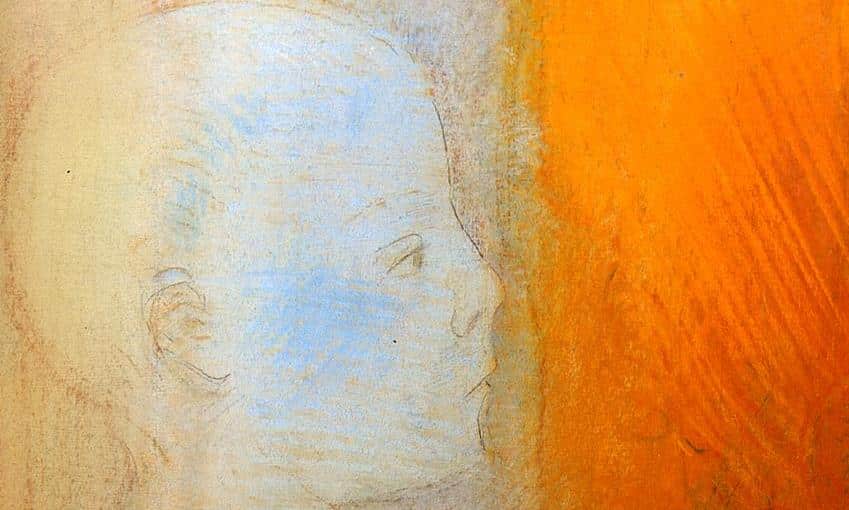
Image: Odilon Redon, The Child