

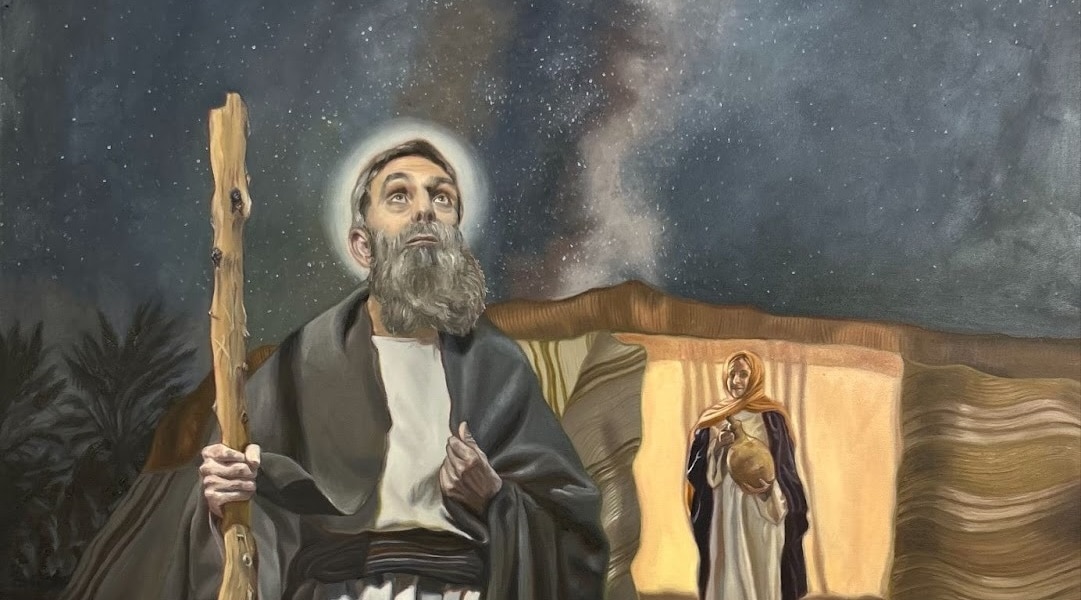
“Descendants as countless as the stars of the sky” (Gen 22:17) seems like an impossible promise for someone in Abraham’s shoes. The stars are practically innumerable, and Abraham was an aging man without an heir. Gazing up at the vast desert sky and contemplating the magnitude of God’s promise must have been overwhelming. If I were in his position, my only response to his promise would be, “Why me, Lord?”
Saint Paul’s “vast desert sky” was the number of people he had to evangelize. He probably asked the same question whenever he reflected on God’s election of “a blasphemer and a sinner” (1 Tim 1:13) to be his apostle. There were plenty of better candidates who had seen the resurrected Christ and were already proclaiming the Gospel. If I were St. Paul, who had been working tirelessly to destroy Christianity, I would wonder, “Why me, Lord?”
God’s providence is full of these apparent contradictions. Saint Augustine was busy with worldly pursuits before eventually becoming one of the Church’s greatest theologians. Saint Francis of Assisi lived extravagantly but eventually became the exemplar of poverty. Saint Catherine of Siena was an illiterate Tuscan girl who would one day be named a Doctor of the Church. If God made known the pledge of future glory to all these holy men and women before it came to be, perhaps they too would have asked, “Why me, Lord?”
Even the Blessed Virgin Mary asked the Archangel Gabriel at the Annunciation, “How can this be, since I have no relations with a man?” (Luke 1:34). Despite the apparent impossibility of a virgin birth, Mary displays the perfect response to God’s promises: “May it be done to me according to your word” (Luke 1:38). Mary’s response is one of hope. She feels this hope because the good that God promises is difficult but also attainable. Abraham, Saint Paul, and all the saints respond to the Lord with this hope. While the question “Why me, Lord?” may have crossed these holy hearts, it did not deter them from a hopeful “yes” to the promises of God.
“Why me, Lord?” can be our response for any number of reasons. Maybe, like Abraham’s hope for an heir, we think the opportunity has passed. Or, like St. Paul, we see our past sins as an impediment to a holy future. Perhaps even similar to Blessed Virgin Mary, the promise received requires great faith. Whatever reason for skepticism these saints may have had, they did not despair of the good things that God promised them. We may feel this sense of despair when the goods of God seem unattainable. Our response of “Why me, Lord?” can lead to despair towards the good things that God offers us. We must not respond this way, but remember that the proper feeling towards God’s promised goodness is hope.
But “Why me, Lord?” is not always a bad reaction to God’s promises. It can be a sign of humility before God’s greatness. It can stem from a repentant heart for having offended God. What it cannot become is a cause to lose hope that God’s promises to us are attainable. The next time you are trying to count the stars in the vast desert sky, and you are wondering, “How could God be so good to me?” remember: “If you are Christ’s, then you are Abraham’s offspring, heirs according to promise” (Gal 3:29). God rewarded Abraham by fulfilling his promise, and you, too, are a recipient of God’s promises. Have hope that in Christ you will be rewarded with fulfilled promises.
Image: Mafalda Cirenei Torres, Abraham Looking at the Stars